A vape detector can tell a school that an incident has occurred. It cannot explain why it happened, help a student understand the risks, or teach that student how to make a different choice next time. That is the challenge facing schools as they look for effective ways to address youth vaping and substance use. Detection matters, but what happens after the alert may matter even more.
At Playbl, we believe prevention is strongest when students are surrounded by multiple layers of support. No single digital program, school policy, technology platform, or community event can solve youth substance use on its own. That is why Playbl is working with Zeptive, an advanced vape-detection company, and Victoria’s Voice Foundation, an organization focused on youth substance use prevention, education, and community outreach. Together, these relationships connect timely technology, evidence-based digital education, and face-to-face family and community engagement.
Playbl + Zeptive: Turning Detection Into a Teachable Moment
When a school’s vape detector signals an incident, administrators must decide what happens next.
For many schools, the traditional response has centered on discipline. A student is caught, a consequence is assigned, and the incident is considered resolved. But while a disciplinary response may address the immediate violation, it does not always address the knowledge, decision-making, social pressure, or other factors that contributed to the behavior.
The collaboration between Playbl and Zeptive gives schools an opportunity to take a more complete approach. Zeptive’s technology helps school staff identify a potential vaping incident in real time. Staff can then respond according to the school’s policies and connect the student with an appropriate Playbl digital program, such as SmokeScreen, ReFresh, or ReMind.
Playbl’s role is not to replace accountability. It is to add education and skill building to the response. Instead of allowing the process to end with “you got caught,” schools can use the incident as an opportunity to help the student reflect, better understand the risks, and develop skills that support healthier decisions.
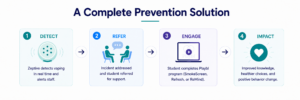
This approach creates a clearer progression:
Detect the incident. Respond appropriately. Engage the student in education. Support positive behavior change.
Why the Response After an Incident Matters
Students who are struggling often need greater connection to trusted adults and supportive resources, not greater distance from them. As we discussed in our May blog for Mental Health Awareness month, keeping students connected to school can support their well-being and create more opportunities for meaningful intervention.
That does not mean schools should overlook policy violations or remove consequences. It means accountability and education do not have to be competing approaches. A restorative, skill-building response can help schools address the behavior while keeping students connected to the people and resources that can help them move forward.
Playbl + Victoria’s Voice: Extending Prevention Beyond the School Day
Prevention that stops with the student misses an important part of the picture. The messages students hear at school are most effective when they are reinforced by parents, caregivers, and other trusted adults. Families also need current information, practical tools, and opportunities to talk openly about fentanyl, vaping, substance misuse, mental health, and the pressures young people face.
Playbl’s work with Victoria’s Voice Foundation brings together two complementary forms of prevention. Playbl provides evidence-based digital programs that reach students through interactive experiences. Victoria’s Voice Foundation brings prevention education into schools and communities through in-person programming.
Its Save Our Kids school assemblies use personal stories of loss and resilience to educate students about fentanyl and substance misuse. Its VITAL SIGNS for Parents discussions help parents and caregivers better understand the risks facing young people and provide tools for protecting and supporting their children.
Playbl reaches students through the digital environments they already understand. Victoria’s Voice creates opportunities for students, families, educators, and community members to engage face-to-face. Together, these approaches help reinforce prevention messages across the different environments that influence a young person’s choices.
Building a More Complete Prevention Strategy
Each organization plays a distinct role. Zeptive gives schools timely visibility into a potential concern. School staff provide the immediate response and determine the appropriate next steps. Playbl helps students build knowledge and decision-making skills. Victoria’s Voice engages families and communities in the broader prevention effort.
No one piece replaces the others. Detection without education may identify the behavior without addressing what contributed to it. Education without family and community engagement may stop before it reaches the adults who help shape and reinforce a young person’s choices.
By connecting technology, student-centered education, and community support, schools can move beyond simply identifying a problem. They can create a more coordinated response that supports accountability, keeps students connected, and gives young people more tools to make healthier choices.
Detection may begin the response, but it should not define the entire response. Schools and community organizations interested in strengthening their youth substance use prevention and intervention strategies can connect with Playbl to learn more about these programs and partnerships.